Tag: how to earn money

  • 8 Best Freelancing Websites | Low Competition

    8 Best Freelancing Websites | Low Competition

    8 Freelancing Websites With Low Competition (Especially for Beginners)

    Introduction

    When I was thinking about where I would go if I had to start freelancing from scratch — no existing clients, no reputation, no portfolio built up — the answer was not Fiverr or Upwork. Both platforms are flooded. Thousands of people competing for the same jobs, often driving prices so low that you can barely cover your time.

    So instead, I spent a long time looking at lesser-known platforms. Some of them turned out to be genuinely different. A few even surprised me with how much earning potential they hold, especially for someone just getting started. What follows is an honest breakdown of eight platforms that deserve far more attention than they currently get — along with real numbers, real examples, and what actually works.

    No company paid me to include them here. This list reflects where I would personally go today.

    One important clarification before going further: some platforms on this list, specifically Toptal and MarketerHire, are not easy to enter. The acceptance rates are low and the screening is rigorous. However, once accepted, competition drops sharply because the pool inside is small and clients come pre-qualified. The “low competition” advantage on those platforms exists after acceptance, not before it.


    What Are Low-Competition Freelancing Websites?

    freelancing

    Low-competition freelancing websites are platforms where significantly fewer freelancers compete for the same jobs compared to overcrowded general marketplaces like Fiverr or Upwork. These platforms typically specialize in a specific industry, such as design, software development, digital marketing, or YouTube content creation, which naturally filters the audience and attracts only serious, relevant professionals. Because the applicant pool is smaller and more targeted, beginners have a genuine opportunity to stand out, land better-quality clients, and earn higher rates from the very first project.


    Quick Platform Comparison

    Platform Best For Entry Difficulty Competition Level
    Dribbble Graphic and UI designers Easy Low
    Turing Software developers Medium Low after screening
    Toptal Developers, designers, finance experts Hard (3% accepted) Very low inside
    MarketerHire Digital marketers Hard (5% accepted) Very low inside
    Webflow Experts Webflow web designers Easy Low
    WeWorkRemotely All remote professionals Easy Medium
    YTJobs Video, scripting, design for YouTube Easy Low to medium
    Catalant Strategy and business consultants Medium Low

    Statistics Worth Knowing Before You Pick a Platform

    Before jumping into specific websites, some numbers help put things in perspective.

    According to a 2024 report by Statista, the global freelance market is projected to reach over $500 billion by 2030. Yet most beginners crowd onto the same two or three platforms, leaving dozens of high-quality alternatives almost empty by comparison.

    On mainstream platforms like Upwork, a single entry-level job posting can attract 50 to 200+ proposals within hours. On niche platforms like YTJobs or Webflow Experts, some listings sit with fewer than ten applicants, sometimes fewer than five.

    The acceptance rate difference is also telling. Platforms like Toptal and MarketerHire accept only 3% to 5% of applicants according to their own published screening data, but once inside, freelancers report earning two to five times more per hour than they would on general marketplaces. Meanwhile, community-based platforms like Dribbble have no rigid acceptance barrier, making them accessible without sacrificing quality of clientele.

    These numbers matter because picking the right platform from day one affects your earnings ceiling for the next several years.


    Dribbble: A Creative Shelter for Designers
    Most designers treat Dribbble purely as a portfolio site and leave it at that. That is a mistake. Over time, it becomes clear that many of the best freelance design opportunities circulate entirely within Dribbble’s community, never making it to general job boards.

    Dribbble is built for graphic designers, UI/UX creators, motion designers, and illustrators who want to put their work in front of a global audience. The platform lets you share projects, gather feedback, and connect directly with potential clients or collaborators.

    What makes it genuinely useful for beginners is that the barrier to getting seen is lower here than on traditional freelance marketplaces. Your work speaks first. You do not need years of reviews or a rating score to attract attention. A compelling shot, posted consistently, can pull in client inquiries within weeks.

    From my experience, designers who post at least three to four quality pieces per week and engage with others in the community start getting noticed within a month or two. One designer I know landed a $4,000 branding project purely through a Dribbble connection, six weeks after creating her account.

    There are also significant platform updates planned for Dribbble in the near term that look promising for designers trying to monetize their presence. Getting set up early tends to pay off.

    Pros

    • Portfolio-first discovery with no bidding wars
    • Open to beginners without a review history
    • Active community that generates organic referrals
    • No percentage cut on earnings negotiated directly

    Cons

    • Requires consistent posting to build visibility
    • No built-in payment or contract system
    • Takes time before inquiries start coming in

    Turing: Remote Work Built Around Developers

    If software development is your trade and you want remote work that pays serious money, Turing operates differently from almost every other platform out there.

    The model is straightforward. Before you even complete your registration, Turing puts you through a programming assessment. This is not a formality. The test filters out the majority of applicants, which is exactly the point.

    What surprised me most about this structure is that the exclusivity actually protects the people inside. Because the knowledge barrier is high, Turing developers are matched with global companies, including recognized enterprises with real budgets. There are no clients bargaining rates down to pennies per hour.

    The rematch rate sits at 99%, which means that after finishing one project, developers are almost immediately placed with another client. For someone who wants consistent income rather than constantly hunting for the next gig, that figure alone makes Turing worth considering seriously.

    A developer friend who passed the Turing screening told me that within his first three months, he was earning more remotely through the platform than he had been at his previous in-office position. He has not looked elsewhere since.

    Pros

    • 99% rematch rate means near-continuous work
    • Enterprise-level clients with proper budgets
    • No race-to-the-bottom on pricing

    Cons

    • Programming test required before registration completes
    • Primarily suited to experienced developers
    • Not ideal for part-time or project-based work preferences

    Toptal: Where the Top Three Percent Work

    Toptal is the platform I have personal experience with, having joined back in 2017. The entry process is genuinely difficult. Only 3% of applicants make it through, and the screening involves multiple rounds including skill tests, live problem-solving sessions, and test projects.

    For people who clear all of that, the experience on the other side is genuinely different.

    Clients on Toptal are pre-vetted. They are not browsing for the cheapest option. They come specifically because they want proven talent, and they are prepared to pay for it. One thing that became obvious early on was that rate negotiations do not fall on the freelancer. Toptal handles those discussions, which removes a huge amount of friction that usually comes with client work.

    You keep 100% of your earnings. Payouts run slower compared to some other platforms, but the per-project amounts are higher, often significantly so.

    From my own time on Toptal, the quality of client relationships stands out most. Projects are substantive, clients are respectful of timelines, and repeat engagements are common. For anyone in development, design, or finance who can clear the screening, this platform deserves serious consideration.

    Pros

    • Keep 100% of earnings with no platform commission
    • Toptal handles rate negotiations on your behalf
    • Pre-vetted clients who come with real project budgets
    • Repeat work is common once established inside

    Cons

    • Only 3% of applicants are accepted
    • Multi-round screening process takes weeks
    • Payouts are slower compared to most other platforms

    MarketerHire: Built Exclusively for Marketing Professionals

    Almost as selective as Toptal, MarketerHire accepts roughly 5% of applicants and focuses entirely on digital marketing talent. If your background is in SEO, paid advertising, social media strategy, email marketing, or growth, this is one of the more impressive niche platforms available.

    The client list includes major brands like Netflix, HelloFresh, and Ministry of Supply. These are not small businesses testing the waters with marketing for the first time. They come with defined budgets and specific objectives.

    Like Toptal, MarketerHire manages the client-facing administrative side. Freelancers receive client introductions and keep their full earnings without handling rate negotiations themselves.

    After testing different approaches to finding marketing freelance work, the contrast between a platform like MarketerHire and a general marketplace is sharp. On a general platform, a marketing freelancer competes with hundreds of others, many of whom undercut on price. On MarketerHire, the competition is selective but the reward is proportionate.

    I have not used this one personally since my background is not in digital marketing, but if it were, this is genuinely the first place I would create a profile.

    Pros

    • Work with recognizable brands that have real marketing budgets
    • Keep 100% of earnings with no commission deducted
    • Platform manages client admin and introductions

    Cons

    • Only 5% of applicants accepted
    • Limited to digital marketing specializations
    • Not suitable for general or non-marketing freelancers

    Webflow Experts: Playground for Web Designers

    Webflow Experts operates inside the Webflow ecosystem and connects skilled web designers with clients who have already committed to building on the Webflow platform. That specificity changes everything.

    When a client arrives on Webflow Experts, they are not still deciding which tool to use or what kind of designer they need. The decision is made. They want someone who knows Webflow well, and they are prepared to pay accordingly.

    One person in my professional network has earned over $200,000 through this platform alone. Another consistently receives two to three qualified leads per month, with individual project values ranging from $5,000 to well past $100,000 depending on scope.

    The exposure here is concentrated in the right place. Rather than casting a wide net and hoping the right clients find you, Webflow Experts puts your profile directly in front of people who have already decided to work within the platform you specialize in. For web designers who build on Webflow, this is one of the highest-leverage moves available.

    Pros

    • Clients are already committed to Webflow, no selling required
    • High project values with less competitive bidding
    • Direct source placement with qualified, ready-to-hire clients

    Cons

    • Only relevant if you work in Webflow specifically
    • Requires a strong portfolio to stand out
    • No built-in payment processing

    WeWorkRemotely: Remote Employment With Real Companies
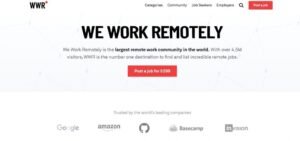
    WeWorkRemotely describes itself as a platform for remote job opportunities, and that framing is important. It operates more like a remote employment marketplace than a traditional freelance site.

    The distinction matters. If writing repeated proposals for short-term gigs sounds exhausting, WeWorkRemotely is structured differently. Companies post here for full-time remote roles, mostly permanent positions rather than project-based contracts.

    The platform draws over 4.5 million monthly visitors and hosts listings from companies including Google, Amazon, and InVision. Employers pay between $350 and $450 to post a single job listing, which means the listings are not casual experiments. Companies using this platform are serious about hiring.

    Coverage spans programming, design, sales, and marketing. For someone who wants the stability of employment with the flexibility of full remote work, this is a fundamentally different opportunity than most freelance platforms offer. It is worth understanding clearly before signing up, because the experience is different from gig-based freelancing.

    Pros

    • Major companies including Google and Amazon post here
    • Employer-paid job listings filter out low-budget clients
    • Broad skill coverage across tech, design, sales, and marketing

    Cons

    • Focused on full-time employment, not short-term projects
    • Less suitable for people who prefer gig-style freelancing
    • High competition for positions from well-known employers

    YTJobs: Where YouTube Channels Hire

    YTJobs is exactly what the name suggests, and it is more substantial than most people realize. The platform connects YouTube creators, including large and well-funded channels, with freelancers in video production, scriptwriting, thumbnail design, video editing, and related roles.

    Channels like SypherPK, Lachlan, Jesser, Lexi Hensler, and Mr. Beast have hired through YTJobs. These are not small operations. They produce regular content at high volume and need reliable professionals to support that production.

    Employers pay over $150 just to post a listing, which filters out clients who are not genuinely committed to filling the role. That cost creates a much lower noise-to-signal ratio compared to free job boards.

    This is actually the platform I use when hiring for roles connected to my own channel. The quality of applicants tends to be higher, and the clients who post are generally clear about what they need. For anyone with video or creative skills looking to work in the YouTube space, this is the most direct route.

    Pros

    • Clients pay to post listings, which signals genuine hiring intent
    • Access to large, well-funded YouTube channels
    • Strong demand for video editors, writers, and thumbnail designers

    Cons

    • Limited to YouTube-adjacent creative roles
    • Smaller overall job volume compared to general platforms
    • Less useful for professionals outside video and content creation

    Catalant: Consulting for Professionals With Deep Expertise

    Catalant sits in a different category from every other platform on this list. The focus is consulting, specifically high-value, project-based engagements with large organizations including Fortune 500 companies.

    If your background is in strategy, finance, operations, or another specialized professional field, Catalant connects that expertise with companies that need it on a project basis rather than as a permanent hire.

    One measurable example: Sean O’Dowd, a consultant who has used Catalant for several years, has earned over $567,000 through the platform working with enterprise clients. That is not an outlier fabricated for effect. It reflects what is possible when specialized knowledge meets clients who have the budget and the need to pay for it.

    I first joined Catalant over five years ago. The platform is not for generalists. It rewards depth, credentials, and the ability to solve specific high-stakes business problems. For the right professional, the earning ceiling here is genuinely high.

    Pros

    • Fortune 500 clients with substantial consulting budgets
    • Project-based work suits experienced professionals well
    • High earning potential for the right specialization

    Cons

    • Not designed for generalists or creative freelancers
    • Requires demonstrated expertise in a specific professional field
    • Slower deal cycles compared to typical freelance platforms

    Tool Stack Worth Using Alongside These Platforms

    Picking the right platform is only part of the equation. The tools you use to manage your work and present yourself professionally make a real difference.

    Notion is useful for tracking client communications, project timelines, and invoices across multiple platforms simultaneously. Loom allows you to send video walkthroughs to clients rather than writing long explanatory emails, which saves time and builds rapport faster. Bonsai or AND.CO handles contracts and invoices cleanly without requiring any legal background. Calendly removes the back-and-forth of scheduling by letting clients book directly into your available slots. For designers specifically, Behance running alongside Dribbble doubles your portfolio reach with almost no additional effort.

    None of these tools are expensive, and several have free tiers sufficient for someone starting out. Getting this infrastructure in place before landing the first client saves a significant amount of confusion later.


    Mistakes Beginners Make on These Platforms

    Most people who sign up for these platforms and see little result are making one of a small number of predictable errors.

    The most common one is treating the profile as an afterthought. On every platform listed here, the profile is the first impression. A generic bio with no specifics, no examples of past work, and no clear statement of what you actually do will produce almost no results regardless of how much you apply.

    The second mistake is applying broadly rather than specifically. Sending the same generic message to fifty different job listings is less effective than sending five carefully written responses that directly address what each client described. Clients can tell the difference immediately.

    Third, many beginners price too low, believing it increases their chances. On premium platforms like Toptal or MarketerHire, underpricing signals inexperience. Clients on those platforms are not looking for the cheapest option. Setting competitive rates from the start positions you correctly.

    Finally, a lot of beginners quit too early. Most platforms take four to eight weeks before a profile gains meaningful visibility or the first legitimate inquiry arrives. Consistency during that period, continuing to improve the profile, post work, and apply selectively, is what separates people who eventually earn well from those who give up and conclude the platform does not work.


    Conclusion

    The eight platforms covered here offer something that the major general marketplaces largely do not: breathing room. Less crowding, better-quality clients, and in several cases, structural advantages like platform-managed billing or guaranteed rematching that make the freelance experience more sustainable.

    The key is matching the platform to your actual skill set and situation. A developer chasing consistent remote work and a designer building a portfolio have different needs, and the right answer differs accordingly.

    Pick one or two platforms from this list that align with what you do. Invest the time to build a profile that genuinely represents your capabilities. Apply selectively rather than broadly. And give it enough time to actually work.

    Every person earning well through freelancing today started somewhere. The advantage of starting on a less-crowded platform is that the first win tends to come faster, and that first win changes everything.



    FAQS

    Frequently Asked Questions

    Which freelancing platform works best for someone with no prior experience?

    Dribbble and WeWorkRemotely are the two most accessible starting points. Dribbble rewards the quality of the work itself rather than a history of client reviews. WeWorkRemotely attracts companies hiring for remote roles, some of which are explicitly open to candidates who are newer to formal employment but strong in their skill area.


    Is it realistic to freelance full-time from day one?

    For most people, starting part-time while maintaining another income source is the more stable path. The first one to three months on any platform involve building visibility and landing initial clients, which takes time. Once a steady flow of work is established, transitioning to full-time becomes much more manageable.


    Do these platforms charge freelancers a percentage of earnings?

    It varies. Toptal and MarketerHire allow freelancers to keep 100% of their earnings. General platforms typically take between 10% and 20%. YTJobs and WeWorkRemotely charge employers rather than freelancers. Reading the payment structure for each platform before investing significant time there is worth doing.


    How long does it typically take to land the first paid project?

    On open community platforms like Dribbble or Webflow Experts, the first inquiry can come within a few weeks if the profile and portfolio are strong. On selective platforms like Toptal, the screening process itself takes two to four weeks before you are even eligible for client matching. Planning for a realistic timeline of one to two months before earning the first payment prevents early discouragement.


    Disclaimer

    Disclaimer

    The information shared in this article is based on personal research and general experience. I have written this article to help people who are genuinely looking to learn not to make any guarantees about results or earnings.

    Everyone’s situation is different. What works for one person may not work exactly the same way for another so please use your own judgment before making any decisions based on what you read here.

    Some of the tools, platforms, or methods mentioned in this article may change over time. I do my best to keep things accurate but I can’t guarantee that every detail stays up to date forever.

    This article is for informational purposes only and it is not professional financial, legal, or business advice. If you’re making serious decisions especially around money or business please consult a qualified professional.

    If there are any affiliate links or sponsored mentions in an article they will be clearly disclosed. I only recommend things I genuinely believe are useful.

    Thanks for reading and I hope you found something valuable here.


    Found this guide useful? Share it with someone who is thinking about starting freelancing. And if you have a question about getting started — drop it in the comments. Real questions get real answers.


    This article is written by “Topic Person.”

  • How to Start Freelancing and Earn Money: A Beginner’s Honest Guide

    How to Start Freelancing and Earn Money: A Beginner’s Honest Guide

    How to Start Freelancing and Actually Earn: A Beginner’s Honest Guide

    Most freelancing articles tell you to “build a portfolio” and “set competitive rates.”

    That advice is not wrong. It is just incomplete.

    Nobody tells you that your first Fiverr gig might sit at zero orders for twelve days. Nobody warns you that the first client who responds might try to expand the scope after you have already submitted the work. And nobody prepares you for how demoralizing it feels to refresh the dashboard and see nothing again.

    This guide covers the full picture. Practical steps, realistic timelines, and what actually separates freelancers who figure it out from those who quit after six weeks.
    You can also explore “8 Best Freelancing Websites | Low Competition.”


    What Freelancing Actually Means

    Freelancing means selling a specific skill to different clients on a project-by-project basis.

    No single employer. No fixed salary. You set the rate, choose the work, and operate from wherever focus is possible.

    The range of services freelancers sell online is wider than most beginners expect:

    • Copywriting and blog writing
    • Short-form video editing
    • Web development
    • Translation and transcription
    • Data entry and research
    • Social media management
    • Virtual assistance

    And dozens of narrower specializations within each of those.

    One thing worth understanding before starting: this is not passive income. It is self-employment. The freedom is real but nobody fills your schedule when things go quiet. Nobody chases payments on your behalf.


    Why People Choose Freelancing

    • No income ceiling. Raising rates or taking on better clients directly increases monthly earnings. No performance review required.
    • Location independence. Work from a home desk, a rented apartment, or a café wherever concentration is actually possible.
    • Skill-based entry. No degree required. Clients care about what you deliver, not where you studied.
    • Currency advantage. A freelancer in Pakistan, Bangladesh, or the Philippines earning in US dollars or Euros commands significantly stronger local purchasing power than local salaries typically offer. Real advantage. Not a small detail.

    The honest caveat: freelancing income is inconsistent early on. Planning for that financially before starting removes a lot of unnecessary pressure.


    Realistic Timeline: How Long Does It Take?

    Weeks 1–2: Setup Phase

    • Build profiles on Fiverr or Upwork
    • Create portfolio samples
    • Send first proposals
    • Zero income for most people — normal

    Weeks 3–6: First Response Phase

    • First replies and messages appear
    • Possibly a first order
    • Earnings are usually between $0 and $150
    • Some freelancers land a client here. Many do not

    Months 2–4: Momentum Phase

    • Reviews start accumulating
    • Repeat clients begin appearing
    • Part-time freelancers can reach $200 to $600 per month

    Months 6–12: Growth Phase

    • Consistent reviews and reliable delivery
    • Around 20 hours per week can realistically reach $800 to $2,000 monthly
    • Developers and designers often exceed this range

    These are realistic ranges — not guarantees. Speed depends on skill demand, proposal quality, and willingness to adjust when something is not working.


    Best Freelancing Skills to Start With Right Now

    Lower Barrier Easier to Begin

    • Short-form video editing (Reels, Shorts, TikToks)
    • Data entry and online research
    • Transcription and captioning
    • Virtual assistance and inbox management
    • Basic graphic design using Canva

    Medium Difficulty and Higher Earning Potential

    • Copywriting and blog writing
    • SEO content writing
    • Podcast editing
    • WordPress website setup

    Higher Skill Strongest Long-Term Earning

    • Web and app development
    • UI/UX design
    • Technical writing
    • Paid advertising management

    Start with a skill you already have. A competent beginner at something mid-range will outperform someone mediocre at a “high-value” skill in almost every early situation.
    You also learn “How to earn money by Content Writing: A Beginner’s Honest Guide.”


    How to Get Your First Freelancing Client

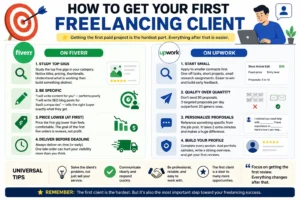
    Getting the first paid project is genuinely the hardest part. Everything after that is easier.

    On Fiverr


    Study the top five gigs in your category. Notice titles, pricing, thumbnails. Understand what is working then build something distinct.

    • “I will write content for you” — performs poorly
    • “I will write SEO blog posts for SaaS companies” tells the right buyer exactly what they get

    One beginner copywriter rewrote her gig three times before the first order arrived. The change that worked was replacing “content writer” with “blog writer for finance websites.” Same skill. Same person. Completely different result.

    Price the first gig lower than what feels comfortable. The goal of the first five orders is reviews, not profit.

    On Upwork


    Apply to smaller contracts first. One-off tasks, brief editing jobs, small research assignments. Easier to win and they build the first visible feedback on the profile.

    Most beginners think sending 50 proposals helps. Usually it just burns Connects and demoralizes faster.

    Three targeted proposals per day outperform twenty generic ones. Always referencing something specific from the job post takes two extra minutes and makes an immediate difference.


    How to Build a Portfolio With No Experience

    No experience is not the blocker that most beginners think it is.

    Clients want proof of ability. They do not care how that proof was created.

    Here is what actually works:

    Create sample projects. Write three blog posts on topics in your niche. Edit a short video using free footage. Design a mock logo for a fictional brand. These demonstrate skill without requiring a paid client.

    Offer discounted work early on. Some freelancers take one or two projects at a reduced rate specifically to generate a real portfolio piece and a genuine testimonial. Not ideal long-term — but effective as a starting point.

    Use personal projects. A YouTube channel, a blog, a social media page any real output counts as portfolio evidence. Even if it was made for yourself.

    Showcase process, not just results. A short explanation of what the goal was, what approach was used, and what the outcome was makes any portfolio piece stronger. Clients want to understand how you think.

    The portfolio does not need to be large. Three strong, specific samples in a clear niche are more convincing than ten generic ones.


    Navigating Fiverr

    Fiverr works on a Gig system. Sellers list defined packages with fixed prices, delivery times, and revision limits. Buyers browse and order directly no lengthy interview required.

    What Actually Works on Fiverr

    Go specific with your niche.

    “Video editing for real estate agents” converts better than “video editing for any business.” Less competition. Higher match rate.

    Invest in the thumbnail.

    Many buyers decide whether to click based on the thumbnail before reading a single word. Clean, readable, easy to understand at small size. This detail gets ignored far too often.

    Keep introductory pricing temporary.

    Many beginner video editors start at $10 to $15 per clip to collect reviews, then move toward $35 to $50 as the profile builds. That rate increase will not happen automatically it has to be decided and executed deliberately.

    Deliver before the deadline. Every time.

    One late order affects visibility more than most sellers expect. The algorithm tracks this quietly.


    Navigating Upwork

    Upwork connects freelancers with larger, often multi-month projects. Clients post detailed briefs. Freelancers submit proposals and compete for the contract.


    Understanding the Job Success Score

    The platform uses a Job Success Score (JSS) as a public metric.

    • Above 90% — strong profile visibility, more interview requests
    • Dropping below 80% — noticeably fewer opportunities

    Protecting that score matters more than maximizing contract volume. One poorly handled project can drop it in a way that takes months to recover.


    What Actually Works on Upwork

    Complete every profile section.

    Photos, headlines, bios, portfolio samples and clients evaluate all of this silently before reading any proposal. Incomplete profiles get skipped without a second thought.

    Filter searches aggressively.

    Exclude:

    • Unverified payment methods
    • Very low budgets
    • Clients with no hiring history or reviews

    Low-quality projects are not worth the time especially when income is slow and the temptation to accept anything is highest.

    Write proposals that feel personal.

    • One direct sentence addressing the client’s specific problem
    • Brief description of the approach
    • One specific question about the project
    • Under 200 words total

    Clients on Upwork care more about clear, fast communication than perfectly formal English. A quick, clear reply wins more contracts than flawless grammar with a 48-hour response time.


    A Real Failure Moment

    The profile was complete. The gig was live. Title specific. Pricing competitive. Description covered everything.

    Nine days. Nothing.

    The easy conclusion is that the skill is wrong or the platform does not work. That conclusion is almost always wrong and almost every beginner reaches it anyway.

    What needed changing was the thumbnail. Too text-heavy. Too dark. Looked identical to a dozen other gigs in the same search results.

    A simpler version was uploaded. Clean background, one clear line, readable at small size. The first order came five days later. It was $15 for a short blog post outline. Not impressive. But it was the first review and everything moved differently after that.

    The problem was never the skill. It was one image.


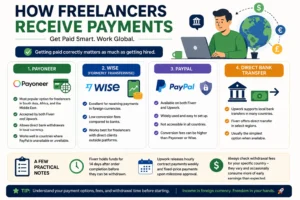
    How Freelancers Receive Payments

    Getting paid correctly matters as much as getting hired.

    Payoneer

    Most popular option for freelancers in South Asia, Africa, and the Middle East. Accepted by both Fiverr and Upwork. Allows direct bank withdrawals in local currency. Works well in countries where PayPal is unavailable or unreliable.

    Wise (formerly TransferWise)

    Excellent for receiving payments in foreign currencies with low conversion fees. Works best for freelancers with direct clients outside platforms.

    PayPal

    Available on both Fiverr and Upwork. Widely used but not accessible in all countries. Conversion fees can be higher than Payoneer or Wise.

    Direct Bank Transfer

    Upwork supports local bank transfers in many countries. Fiverr offers direct transfer in select regions. Usually the simplest option when available.

    A few practical notes:

    • Fiverr holds funds for 14 days after order completion before they can be withdrawn
    • Upwork releases hourly contract payments weekly and fixed-price payments upon milestone approval
    • Always check withdrawal fees for your specific country they vary and occasionally consume more of early earnings than expected


    Best Free Tools for Freelancers

    AI

    No budget needed to start. These free tools cover almost everything a new freelancer requires:

    For creating work:

    • Canva — Graphic design, presentations, thumbnails, portfolio layouts
    • ChatGPT — Research assistance, brainstorming, first drafts to work from
    • DaVinci Resolve — Professional video editing at no cost

    For staying organized:

    • Notion — Client notes, project records, contract details
    • Trello — Deadline tracking across multiple clients
    • Google Workspace — Shared documents and real-time client collaboration

    For communication and professionalism:

    • Grammarly — Writing quality check before any client-facing message
    • Calendly — Client scheduling without back-and-forth emails
    • Loom — Short video updates for clients in different time zones

    For tracking time and money:

    • Toggl Track — Time logging for hourly contracts
    • Wave — Free invoicing and basic income tracking

    All free tiers. All genuinely useful from day one.


    Industry Statistics Worth Knowing

    • According to Upwork’s 2023 Freelance Forward Report, approximately 59 million Americans performed freelance work in 2023 around 36% of the U.S. workforce
    • Statista’s 2023 Freelance Market Data places the average hourly rate across all Upwork categories at approximately $28, with experienced specialists frequently earning $75 to $150 per hour
    • Freelancers who respond within one hour receive measurably more orders than those with response times above 24 hours

    Charging $8 per hour for skilled work does not signal affordability. It signals inexperience — and attracts the most demanding, lowest-budget clients on the platform.


    Mistakes Beginners Make

    1. Sending Generic Proposals

    “I am a skilled professional with extensive experience” appears in thousands of proposals daily. Clients skip it. Reference the specific job post and propose a concrete approach instead.

    2. Underpricing With No Plan to Raise Rates

    Starting low makes sense. Staying low indefinitely does not. Decide the trigger for the first rate increase five reviews, ten completed orders before accepting the first project. Before. Not after.

    3. Depending on One Platform Only

    Accounts get suspended. Algorithms shift without warning. A freelancer with a LinkedIn presence, a direct client or two, and a basic personal website is far more stable than someone whose entire income runs through a single marketplace.

    4. Ignoring Tax Obligations

    Payments arrive with no tax withheld. Set aside 25 to 30 percent of every payment from the beginning. Easy to delay. Consistently regretted.

    5. Slow Response Times

    A client who messages three freelancers and gets one reply within an hour almost always goes with that person regardless of price or profile strength. Response speed is underrated, especially early on.


    How to Avoid Burnout as a Freelancer

    Burnout is real in freelancing and more common than most guides acknowledge.

    The pressure of finding clients, delivering work, managing communication, and handling finances simultaneously is genuinely demanding. A few habits make a meaningful difference:

    Set working hours and keep them. Freelancing does not mean being available at all hours. Defined start and end times protect energy over the long term.

    Limit the number of active clients. Two or three clients handled well is more sustainable than five handled poorly. Quality of delivery suffers when spread too thin.

    Take proper breaks. This sounds obvious. Most freelancers ignore it until the quality of their work starts dropping and they cannot figure out why.

    Separate work space from rest space. Even a dedicated corner of a room creates a mental boundary between working and not working. The line matters.

    Review workload monthly. What felt manageable three months ago might be too much now or too little. Adjusting regularly keeps the workload honest.

    Burnout does not announce itself early. The warning signs are usually subtle slower response times, less care in deliverables, reluctance to open the laptop. Catching it early is much easier than recovering from it fully.


    Warning Signs of Scam Clients

    Moving off-platform immediately. Requests to switch to WhatsApp or personal email before any contract is signed frequently precede payment avoidance.

    Vague scope with urgent pressure. “Just start and we will sort out the details” is a setup for scope creep and payment disputes. Confirm details before any work begins.

    Multiple free samples requested. One short sample is reasonable. Three full deliverables “to test skills” is unpaid work with a polite justification attached.

    No reviews, no payment verification, no hiring history. Not an automatic disqualifier but worth significant caution before committing time.


    Conclusion

    Most freelancers do not fail because they lack skill.

    They fail because they quit during the invisible phase — when no one replies, no one clicks, and nothing seems to move.

    That phase is not a signal that freelancing does not work. It is the period before the algorithm surfaces a new profile and before buyers have enough evidence to trust one. Getting through it is the actual barrier to entry.

    If you are starting freelancing this month: focus on getting the first review rather than chasing high income immediately. That first client changes how the profile looks to every buyer who visits after. It also changes how the whole process feels.

    The skill was never the hardest part.

    Frequently Asked Questions

    FAQS

    Is Fiverr oversaturated right now?

    Depends on the category, honestly. Broad niches like “logo designer” or “blog writer” — yes, those are crowded. But “email writer for e-commerce brands” or “video editor for real estate agents”? Much less so. The platform is not the problem. Offering the same thing as everyone else is.

    How long does it take to get the first order on Fiverr?

    Realistically, anywhere from three days to four weeks. If nothing arrives within two weeks, something needs adjusting — usually the thumbnail, the title, or the delivery time. Change one thing at a time so it is clear what actually made the difference. Changing everything at once just creates confusion.

    Is Upwork better than Fiverr for beginners?

    Depends on how you like working, honestly. Fiverr suits people who want to list a fixed service and wait for buyers to come. Upwork suits people comfortable writing proposals and chasing specific projects. Neither is universally better. A lot of beginners try both early on and naturally gravitate toward one.

    How much can a beginner realistically earn in the first three months?

    For most people working part-time somewhere between zero and $500. Month one is usually the slowest. The first order rarely pays well. But that first review matters more than the money anyway, because it changes how the profile looks to every buyer who visits after that.

    Disclaimer

    The information shared in this article is based on personal research and general experience. I have written this article to help people who are genuinely looking to learn not to make any guarantees about results or earnings.

    Everyone’s situation is different. What works for one person may not work the same way for another so please use your own judgment before making any decisions based on what you read here.

    Some of the tools, platforms, or methods mentioned in this article may change over time. I do my best to keep things accurate but I can’t guarantee that every detail stays up to date forever.

    This article is for informational purposes only and it is not professional financial, legal, or business advice. If you’re making serious decisions especially around money or business please consult a qualified professional.

    If there are any affiliate links or sponsored mentions in an article they will be clearly disclosed. I only recommend things I genuinely believe are useful.

    Thanks for reading and I hope you found something valuable here.


    Found this guide useful? Share it with someone who is considering starting to freelance. And if you have a question about getting started drop it in the comments. Real questions get real answers.
     

    Written by Topic Person Team.

  • How to earn money by Content Writing.

    How to earn money by Content Writing.

    How to Earn Money Through Content Writing: A Practical Breakdown for Beginners

    When I first started exploring ways to earn money online, content writing was not the obvious choice. No investment. No camera. Just a keyboard and something worth saying. I realized pretty quickly this was one of the few skills where consistent effort actually translates into income, without needing any degree or special background.

    Let me walk you through what the work actually involves, how to begin, and the parts most beginner guides quietly skip.


    What Is Content Writing?

    Content writing is producing written material for the web. Blog posts, product pages, email newsletters, social media captions, video scripts. All of it falls under this umbrella.

    But here is what separates average work from work that gets paid well: usefulness.

    Anyone can string sentences together. What clients pay for is research-backed, clearly written material that solves a specific problem for a specific reader. Writers who earn well are not necessarily the most polished ones. They write clearly, hit deadlines, and understand what a reader needs before the reader finishes asking.


    Select the Niche

    A niche is simply the topic area you focus on. Think of it like a specialty at a restaurant. A chef known for great pasta builds a name faster than one who attempts everything on the menu.

    Picking a subject you actually know something about gives you a solid edge. Not because passion is magic, but because real knowledge shows up on the page. Readers notice when someone understands a topic versus someone who skimmed three articles before writing.

    Some areas with consistent demand right now:

    • Technology and software
    • Personal finance
    • Health and wellness
    • Digital marketing
    • Education

    A person who has managed their own small budget for years will write about personal finance differently than someone who just looked the topic up. That lived familiarity is what makes writing worth reading, and worth paying for.


    Make Your Portfolio

    You will not get paid well without samples. Clients cannot evaluate promises. They need to see the work.

    Write three to five pieces on topics within your chosen area. Publish them on Medium, LinkedIn, or a basic WordPress site. They do not need to be polished masterpieces. They need to show that you can organize a thought clearly and keep a reader moving through the page.

    A portfolio is not just a writing showcase. It is a first impression. Format matters. Clear headings, short paragraphs, easy to scan. A client reviewing twenty portfolios in one afternoon remembers the one that felt effortless to read.

    One writer published five education-related articles on Medium before contacting any client. Those five pieces led to two paid projects within the first month. No cold calling. No paid ads. Just visible, readable work.


    How Much Can Beginners Earn?

    This is the section most articles avoid because the numbers are not always exciting at first. Knowing what to expect before you start saves a lot of confusion later.

    Beginner Stage: Months 0 to 3

    According to Upwork’s published rate data, beginner blog writers typically charge around $20 per hour, intermediate writers charge $41 per hour, and experienced specialists reach $85 per hour. On a per-word basis, most beginners start between $0.03 and $0.08 per word. A 1,000-word article at that rate brings in $30 to $80.

    Upwork’s 2025 Freelance Forward report shows a growth pattern worth understanding: the median new freelancer earns around $180 in their first month, $1,200 by month six, and $3,500 by month twelve. The curve is real. It rewards consistency over quick results.

    Agency vs. Freelance at a Glance

    Path Monthly Income (Beginner) Consistency Client Control
    Fiverr / Upwork $100 to $400 Low at first You manage it
    Content Agency $200 to $600 Higher Agency manages
    Direct Clients $300 to $800+ Medium You manage it
    Your Own Blog $0 to $50 (first 6 months) Passive long-term Full control

    Blog income takes the longest to build but compounds quietly in the background. Freelancing pays faster but demands consistent effort to keep the pipeline moving.

    Platform Fees: Know Before You Price

    Fiverr currently takes a flat 20% fee from every transaction. Upwork uses a sliding service fee structure, starting at 20% on your first $500 with each client, then dropping as earnings with that client grow. If you charge $50 for an article on Fiverr, you take home $40. Price accordingly from day one.


    Ways to Actually Earn Money From Writing

    Most articles stop at “join Fiverr.” There is considerably more to it. You can also read our complete guide on How to Start Freelancing.

    Freelancing Platforms

    Fiverr and Upwork are the most accessible entry points. Profile setup matters more than most beginners think.

    A weak bio sounds like this: “I am a passionate writer with excellent grammar and I will write amazing content for you.”

    A stronger bio sounds like this: “I write SEO blog posts for SaaS companies and personal finance brands. My articles have ranked on page one for clients in the budgeting and productivity niches. Turnaround within 48 hours.”

    One talks about you. The other talks about what the client gets.

    For the first five projects, price slightly below your target rate. The goal is reviews, not maximum earnings. Five solid testimonials change the conversation when you raise prices.

    According to rate guidance from experienced Upwork freelancers, with ten or more quality writing samples and some client history, a rate of $25 to $35 per hour is a practical and defensible starting point. You can also explore 8 Best Freelancing Websites | Low Competition.

    Your Own Blog

    A focused niche blog attracts search traffic over months. Once that traffic becomes consistent, ad programs and affiliate partnerships turn into income streams that run without active effort. Slower to start. Steadier over time.

    Direct Outreach

    Many small businesses need writers and simply have not looked for one yet. A short email with one relevant sample attached opens more conversations than most people expect.

    Here is a structure that tends to work:

    “Hi [Name], I noticed your blog has not been updated in a few months. I write [niche] content and recently helped a similar site publish articles that brought in consistent organic traffic. Happy to send a sample if useful.”

    Short. Specific. Low ask. That combination gets replies.

    Content Agencies

    Agencies handle client relationships and send briefs directly to you. Rates sit lower than direct clients, but the workflow is steadier. A practical starting point when you want consistent work without spending hours searching for it.


    Writing That People Actually Read

    Structure and rhythm matter just as much as grammar. Think about how you personally read online. You scan. Your eye moves to short paragraphs and clear subheadings. A dense block of text sends most readers back to search results before they finish the opening paragraph.

    What actually works:

    • Short paragraphs, sometimes just one or two sentences. Mix in a longer one occasionally to keep the rhythm from feeling choppy.
    • Subheadings every few hundred words so readers can find exactly what they came for.
    • One clear idea per section. Packing too much into a single block loses people halfway through.
    • Concrete examples instead of vague advice. “I wrote a piece about budgeting apps and it ranked on page one within three months” is far more useful than “write about trending topics.”

    Think of every piece as a story with a clear beginning, middle, and end. Writers who focus only on hitting key points often forget how those points connect, and the result feels scattered even when the information itself is solid.


    Tools Worth Using (and What They Cannot Do)

    Grammarly catches grammar and spelling issues before a client does. The free version handles most of what beginners need.

    Hemingway Editor flags sentences that run too long or are too dense. It pushes writing toward plain, direct language.

    Google Docs handles drafting, editing, and sharing. Most clients already use it, which removes any back-and-forth over file formats.

    These tools support your thinking. No tool tells you whether your argument holds together or whether your example actually fits the point you are making. That judgment develops through practice, not software.


    The Mistake That Slows Most Beginners Down

    The biggest obstacle is waiting to feel ready. New writers spend weeks reading about the craft instead of producing anything. Ability builds through repetition, not preparation.

    Write a piece. Put it somewhere visible. Notice what landed and what did not. Write another. That cycle sharpens your work faster than any course.

    Writing for a vague, imaginary “everyone” produces forgettable content. Before starting any article, settle three things first. Who is reading this? What do they already know? What should they walk away with? Answering those before writing makes every section easier to get right.

    Early on, I also noticed my proposals were too long and too focused on my own background. Clients do not want your biography. They want to know you understand their problem. A short proposal that reflects the client’s own situation back to them, then explains how you would handle it, performs better than a lengthy pitch almost every time.


    FAQS

    Frequently Asked Questions

    How Long Before I Get My First Paying Project?

    Most writers who apply consistently and keep their portfolio updated land a first project within four to eight weeks. Showing up regularly matters more than waiting for a perfect moment.

    Do I Need SEO Knowledge Before Starting?

    Not in depth. Understanding that readers search with specific questions and that your job is to answer them clearly is enough to begin. SEO knowledge builds naturally as you take on more work.

    Is Content Writing Still a Practical Path in 2025?

    Demand has moved away from generic filler toward specialized, well-researched writing that serves readers properly. That shift creates a real opening for writers willing to put in focused work.

    Can This Be Done Part-Time?

    Yes. One or two projects a week is manageable alongside other commitments. Many writers move into full-time work after six to twelve months once their client base becomes steady.


    Conclusion

    Content writing rewards effort that builds on itself. The writers doing well today did not start with an audience or a particular advantage. They picked a focus, built samples, and kept working.

    One niche. Three samples. One application this week. Everything after that comes from the work itself.