Tag: woocommerce

  • How To Get Started In E-Commerce

    How To Get Started In E-Commerce


    How to Start an E-Commerce Store Using WordPress (A Real Beginner’s Guide)

    Introduction

    Honestly, when I first looked into building an online store, I closed the tab three times before actually starting. It looked like a rabbit hole — hosting, domains, plugins, themes, payments. Where do you even begin?

    But then I just sat down one Saturday and went through it. By evening, the store was live. Not perfect, but live. And looking back, the actual setup was maybe two or three hours of real work.

    If you have been putting this off for the same reasons I did, this guide is for you. No fluff, no vague advice. Just the actual steps.

    If you are confused about platforms, you can also read our detailed comparison of Shopify vs WooCommerce before starting your store.


    Why WordPress and Not Something Else

    A lot of people ask why not just use Wix or Squarespace. Fair question.

    The honest answer is control. On those platforms, you are renting space. They can change pricing, limit features, or shut things down. It has happened before. With WordPress, you own the whole thing: your store, your data, your rules.

    WordPress also grows with you. Start with five products today, scale to five thousand later, same platform. You never hit a wall and have to start over somewhere else.

    That flexibility is why millions of stores, from tiny one-person shops to genuinely large operations, all run on WordPress.


    Shopify vs woocommerce

    Shopify or WooCommerce — Which One Should You Choose

    This comes up constantly so I will be direct about it.

    Shopify Is Best for Quick Setup

    Shopify is a managed platform. You pay monthly, they handle servers and security. Setup is fast and clean. If you want a store running this weekend with minimal friction, Shopify does that job well.

    The catch is fees. Shopify charges transaction fees unless you use their own payment system. On small volumes this barely matters. On anything meaningful it adds up, and you feel it.

    You can also learn “how to start Shopify dropshipping.

    WooCommerce Is Best for Long-Term Growth

    WooCommerce is a free plugin that sits on top of WordPress. You manage your own hosting, which is less scary than it sounds. Once you pick a host, you mostly forget it exists.

    No transaction fees. Full design control. Everything customizable. Costs stay predictable as you grow.

    I have set up stores on both. For anyone building something they actually want to grow, WooCommerce wins. The extra hour of setup at the beginning pays back many times over.


    How WordPress Actually Works

    Simple version: WordPress is software that runs your website. But software needs a computer to run on. That computer is your hosting server.

    You rent server space from a hosting company, point your domain name at it, and install WordPress. After that, everything happens through a browser-based dashboard. No technical knowledge needed for day-to-day use.



    How to Choose the Right Hosting Provider

    This decision matters more than most people realize going in. I learned this the frustrating way.

    I ran a test with the same WooCommerce store on two different hosts. One was a cheap shared plan, the other was a LiteSpeed-based provider. Same store, same products, same theme. On the budget host, pages were taking close to four seconds. On LiteSpeed hosting, the same pages loaded in under one and a half seconds. The difference was immediate and obvious.

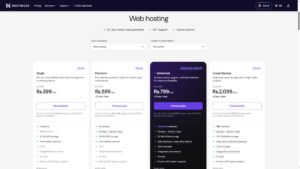
    For beginners, I would genuinely suggest looking at Hostinger or SiteGround first. Both come with dashboards simple enough for anyone to navigate, one-click WordPress installation already built in, and automatic SSL certificates so you are not hunting for that separately. Hostinger tends to be cheaper on longer plans. SiteGround has noticeably better support if that matters more to you.

    What Actually Matters When Choosing a Host

    • Servers built on LiteSpeed or NVMe hardware for real-world speed
    • Built-in CDN included, not sold as an add-on
    • Automatic SSL setup without manual configuration
    • One-click WordPress install from the dashboard
    • Uptime track record of 99.9% or better

    One more thing on pricing. The monthly option looks affordable, but it works out most expensive over a year. The 12 to 48-month plans are where the real discounts live. Lock in a longer term at the start and the savings are genuine.


    Why a CDN Matters for Your Store

    A CDN, Content Delivery Network, stores copies of your website files across servers in multiple countries. A visitor in Germany loads your store from a European server. A visitor in the US loads it from an American one.

    For a store with product photos and media files, this makes a real difference in how fast things load for people who are not sitting next to your main server.

    Practical Benefits of Using a CDN

    • Pages load faster regardless of where your visitors are located
    • Traffic spikes during sales periods do not crash your site
    • Basic security protection against common attacks is built in
    • Mobile shoppers get a smoother experience, which increasingly represents most of your traffic

    Most decent hosting providers include CDN access in their standard plans. Check before signing up.


    How to Install WordPress and Get Started

    After setting up hosting, find the WordPress installer in your dashboard. On Hostinger and SiteGround this is right on the main screen. Enter your site name, create a username and password, and WordPress is installed in under two minutes.

    Your dashboard lives at yourdomain.com/wp-admin. Bookmark that.

    How to Pick the Right Theme

    Go to Appearance, then Themes, then search for Astra. It is genuinely one of the best free themes for stores because it loads fast, works cleanly with Elementor, and does not slow down WooCommerce. Install and activate it.

    Then install the Starter Templates plugin. This gives you professionally designed page layouts to import instead of building from a blank canvas. When it asks which builder you prefer, pick Elementor.


    How to Set Up WooCommerce

    Find WooCommerce in the plugin directory, install it, and activate it. A setup wizard runs automatically.

    What the Setup Wizard Asks You

    • Store country and currency
    • First product details including title, price, description, and photos
    • Basic shipping and inventory preferences

    Once the wizard finishes, go delete the sample products it installed. They are just demo content and look out of place in a real store.

    One Setting Most Beginners Miss

    Before adding actual products, go to Settings, then Permalinks, and switch to Post Name. This gives product pages clean URLs like yourstore.com/product-name instead of something with random numbers. It looks professional and performs better in search results. Most people skip this step and quietly hurt their SEO from day one.


    How to Accept Payments With Stripe and PayPal

    WooCommerce works with most payment processors. For a new store, Stripe and PayPal together cover the large majority of what customers want to use.

    Steps to Get Payments Working

    • Open WooCommerce, go to Settings, then Payments
    • Enable Stripe and PayPal, and connect both accounts
    • Save everything
    • Place a real test transaction before opening the store publicly

    That test step is not optional. I skipped it once on an early project and found out the checkout was broken from a customer email the next day. Five minutes of testing would have caught it. Do not repeat that mistake.


    How to Design Your Store With Elementor

    Elementor turns page editing into something visual. You click on text to change it, drag sections around, swap images, and adjust colors. What you see while editing is what visitors see. No guessing, no refreshing to check results.

    Go to Pages, pick whichever page you want to work on, and click Edit with Elementor.

    Spend real time on this. I discovered that how a store looks directly affects whether people trust it enough to buy. It sounds obvious but many beginners rush through design to get to the launch stage. Consistent fonts, real product photos, and a layout that is easy to follow all matter more than most first-time store owners expect.


    How to Configure Shipping

    Open WooCommerce, go to Settings, then Shipping.

    Shipping Settings to Complete

    • Shipping zones covering the regions you plan to sell in
    • Rates for each zone are flat rate, free shipping, or weight-based depending on your products
    • A free shipping minimum if you want to encourage larger basket sizes

    That last one works well in practice. Customers who are a few dollars short of free shipping will often add another item to qualify. It is a simple setup that pushes order values higher without any discounts involved.


    Essential Plugins Worth Installing

    Beyond the basics, a few extra plugins are worth installing from the start.

    Core Store Plugins

    WooCommerce runs your entire store backend. Products, orders, customers, and payments all live here.

    Elementor handles visual design and page customization without any coding required.

    Astra is your theme, keeping the site fast and compatible with everything else.

    Performance and SEO Plugins

    LiteSpeed Cache handles caching, image compression, and speed optimization in one place. On LiteSpeed hosting the improvement is significant. On other hosting it still helps noticeably.

    Yoast SEO walks you through optimizing each product page for search engines. Titles, descriptions, and content structure. For stores relying on organic search rather than paid traffic, this pays off steadily over time.

    Keep the total count reasonable. Every plugin adds code and another thing that can break during updates. Add what you need, skip what you do not.


    Things Most Beginners Forget

    This is the part most setup guides leave out. The visible setup is done, but there is a whole layer underneath that quietly determines whether your store runs reliably.

    1. Set Up Backups From Day One

    WordPress does not back itself up. One bad update, one hosting issue, and everything is gone. Install UpdraftPlus and connect it to Google Drive or Dropbox. Schedule daily or weekly backups depending on how often you update the store. Takes about ten minutes to set up and has genuinely saved stores from complete loss.

    2. Optimize Every Product Image

    Unoptimized product photos are one of the most common reasons stores load slowly. A photo straight from a camera or phone can be several megabytes. A properly compressed version for the web can be under 100 kilobytes with no visible quality difference.

    Resize images to the actual display dimensions before uploading. Then install ShortPixel or Smush to compress them automatically. This one habit keeps your store fast as the product catalog grows.

    3. Activate Your SSL Certificate

    SSL is what puts the padlock icon in the browser bar and switches your URL to https. Most hosts provide this for free through Let’s Encrypt. Activate it from your hosting dashboard, then update both address fields in WordPress Settings to use https. Without SSL, browsers warn visitors that your site is not secure. That warning kills trust before anyone even sees your products.

    4. Fix Email Deliverability Early

    The default WordPress email goes out through your hosting server and often lands in spam. Order confirmations, password resets, and customer notifications all get affected. Install WP Mail SMTP and connect it to a proper sending service like Brevo or Gmail SMTP. This is a fifteen-minute fix that makes your emails actually arrive reliably.

    5. Set Up Abandoned Cart Recovery

    A meaningful number of shoppers add things to a cart and leave without buying. Without a recovery system, those potential sales just disappear. The CartFlows plugin or a dedicated WooCommerce abandoned cart extension lets you follow up automatically with those visitors. Setting this up early means you capture sales from the beginning rather than after you notice the problem months later.

    6. Add Basic Spam Protection

    Forms and checkout pages attract bot submissions without any protection in place. Install Akismet and add basic CAPTCHA to your forms using WPForms or Fluent Forms. Minor setup prevents a growing problem as your traffic increases.


    Common Beginner Mistakes to Avoid

    Most early store problems trace back to the same few decisions.

    1. Going With the Cheapest Hosting

    Cheap hosting is cheap for a reason. Slow servers, shared resources, unreliable uptime. These hurt your store in ways that are hard to see directly but very real in terms of lost visitors and lost sales. Paying a few dollars more per month for a reliable provider is one of the better investments you make early on.

    2. Installing Too Many Plugins at Once

    Every plugin that gets installed adds weight and complexity. Conflicts during updates become more likely. Performance gradually degrades. Install only what solves a specific problem you actually have right now.

    3. Not Checking Mobile Performance

    Most shopping happens on phones. A store that looks good on a laptop but breaks on a small screen is silently turning away most of its potential customers. Test on your own phone, test on someone else’s, and fix what does not work before launch.

    4. Skipping the Checkout Test

    Run a real test order before going live. Check that the payment goes through, the confirmation email arrives, and the order shows up in your WooCommerce dashboard. Every single time, no exceptions.


    FAQS

    Frequently Asked Questions

    Q1. Do I Need to Know How to Code to Build a WordPress Store?

    No. Elementor handles design visually and WooCommerce handles store functions through settings pages. Coding only comes up if you want something very specific that no existing plugin provides.

    Q2. What Will a WooCommerce Store Actually Cost Me?

    WooCommerce is free. Hosting runs roughly three to ten dollars per month on a longer plan. A domain name costs around ten to fifteen dollars per year. You can launch a real store for well under twenty dollars per month total.

    Q3. Is WooCommerce Safe Enough for Taking Payments?

    Yes, if you keep things updated and use proper payment gateways. Stripe and PayPal process card payments on their own secure systems, so sensitive financial data never actually passes through your WordPress site. Add a free SSL certificate from your host and you are covered for standard security requirements.

    Q4. Can I Switch From Shopify to WooCommerce Later?

    Yes. Migration plugins handle the product data and customer records. It takes some careful attention to get right but everything transfers over without starting from scratch.


    Final Conclusion

    There is no perfect moment to start. The store I had put off building for weeks took one afternoon once I actually began.

    Astra handles your theme. Elementor handles your design. WooCommerce runs your store. Stripe and PayPal handle payments. LiteSpeed Cache keeps it fast. Yoast SEO helps people find it. The tools are all there.

    The section on things beginners forget is where this guide differs from most. Backups, SSL, email setup, image compression — none of it is exciting, but all of it matters once your store is actually running and real customers are depending on it working properly.

    Start simple. Get one product live. Test the checkout. Then build from there.
  • Shopify Vs WooCommerce! Complete comparison

    Shopify Vs WooCommerce! Complete comparison

    Shopify vs WooCommerce: Which One Is Actually Better for Your Online Business?

    Picking the wrong platform can cost you months of work and a surprising amount of money. I have seen it happen. Someone spends three weeks building a Shopify store, then realizes they cannot customize the checkout the way they need. Someone else spends two months wrestling with WooCommerce before admitting they just wanted something that worked without a developer on speed dial.

    Both platforms are genuinely good. But they are built for different kinds of people, different budgets, and different long-term goals. This article goes through every important angle, so by the end you are not just informed — you actually know which one makes sense for your situation.

    You can also learn “How To Get Started In E-Commerce.


    Shopify vs woocommerce


    1. Ease of Use

    Let me be direct: Shopify is easier. There is no asterisk on that.

    The platform was designed exclusively for selling online, and it shows. You log in, pick a theme, add your products, connect a payment method, and you are live. No server setup, no plugin conflicts, no wondering whether your PHP version is compatible. From my experience helping a few people launch their first stores, the typical Shopify beginner is selling within a day or two. Sometimes less.

    WooCommerce is a different situation entirely. It is a plugin that runs on top of WordPress, which is already its own learning curve. Before you ever open the WooCommerce settings, you have bought hosting, pointed your domain, installed WordPress, and figured out at least the basics of the WordPress dashboard. For someone coming in completely fresh, that is a lot of steps before you even see a product listing.

    That said — and this matters — the people who push through that early friction often end up with more capable stores. The complexity is not random. It is the price of flexibility.

    Real example: A friend who makes handmade soap started on Shopify and was taking orders by day three. She did not touch a single line of code. Another person I know who sells vintage photography equipment chose WooCommerce specifically because he wanted to build a custom rental system alongside his shop. Shopify simply could not do what he needed without an expensive workaround.


    2. Pricing: What You Are Actually Paying For

    Shopify’s Basic plan runs around $39 per month. From there, the Shopify plan sits at roughly $105 per month and the Advanced at around $399. Those numbers are before transaction fees, which Shopify charges on every sale processed outside of Shopify Payments. Depending on your plan, that fee ranges from 0.5 percent to 2 percent per transaction. For a store doing $10,000 a month in sales, that is a real number.


    WooCommerce itself costs nothing to download. What you are actually paying for is hosting, which typically lands between $5 and $30 per month for a basic setup, and whatever premium themes or plugins you decide you need. Some plugins are genuinely free and excellent. Others cost $50 to $200 per year. The math works out differently for every store depending on what tools they actually use.


    Here is the honest version of the pricing comparison: at small scale, WooCommerce usually wins on cost. As you grow and start needing more Shopify apps, or as your WooCommerce store needs better hosting and a developer to maintain it, the gap narrows faster than most people expect.

    Note: No hosting provider is affiliated with either platform. You choose whoever you want.

    Real example: A clothing boutique I looked at was paying $39 for Shopify Basic plus around $25 in monthly transaction fees, plus three apps totaling another $45 per month. Their actual monthly platform cost was closer to $110. A comparable WooCommerce setup for the same store, with decent hosting and two paid plugins, was running about $60 per month.


    3. Customization: The Ceiling on What You Can Build

    Shopify gives you a polished set of tools and a clearly defined box to work in. The theme editor handles colors, fonts, layout sections, and basic design choices without any coding. For most stores, that is plenty. But when you want to go deeper, you hit the walls. Structural changes require Liquid, Shopify’s own templating language. Some design decisions simply cannot be made through the editor at all.

    WooCommerce has no equivalent ceiling. WordPress is open source, meaning the entire codebase is yours to modify. You can rework the checkout flow, build entirely custom product pages, adjust how taxes are calculated, change the structure of your URLs, and do it all without asking anyone’s permission or paying for an app. The plugin library alone contains thousands of extensions covering almost any functionality you can think of.

    What surprised me when going back and forth between the two platforms was how quickly you bump into Shopify’s limits when you have a specific, slightly unusual idea. On WooCommerce, unusual ideas are just features waiting to be built.

    Real example: A business selling personalized gifts needed customers to upload images at checkout and preview them on the product. On Shopify, a purpose-built app for that feature cost $29 per month. A WooCommerce developer built the same thing using a free plugin plus about four hours of custom work. After the first year, the WooCommerce approach had already paid for itself.


    4. Features and Functionality

    Shopify’s built-in feature set is genuinely solid. Hosting is included and managed. Payment processing is ready to go. Inventory management, discount codes, abandoned cart recovery, basic SEO settings, and integration with major social selling platforms like Instagram and Facebook are all there by default. For the majority of store owners, this covers everything they need for years.

    The limitation shows up when you want something beyond the standard toolkit. Advanced reporting, for instance, is locked to the higher-tier plans. Certain payment gateways are not available depending on your location. When you do need to extend Shopify, you are almost always going through the app store, and apps have monthly fees.

    WooCommerce comes with a complete content management system underneath it. That means you can run a full blog, create long-form guides, build landing pages, and manage all of it from the same admin dashboard as your store. For businesses where content marketing is part of the growth strategy, this integration is a genuine advantage. After testing different approaches to SEO-driven e-commerce, I found that WooCommerce stores with active blogs consistently outranked their Shopify counterparts for informational search terms, primarily because WordPress’s publishing tools are just more mature.

    Real example: An outdoor equipment retailer built their WooCommerce store alongside a weekly hiking and gear guide section. Within 18 months, that content was driving roughly 40 percent of their organic store traffic. Replicating that strategy on Shopify would have required a separate blog platform and a workaround to connect the two.


    5. Scalability: Can It Handle Growth?

    Shopify scales without you having to think about it much. Traffic spikes, seasonal rushes, a product going viral — the infrastructure absorbs it. When stores reach serious volume, Shopify Plus handles enterprise-level operations including multi-storefront management and advanced checkout customization. The starting price for Plus is around $2,000 per month, so it is not a small decision.

    WooCommerce can absolutely reach the same scale, but the path there is more hands-on. Faster growth means upgrading your hosting sooner. Heavy traffic means you need caching configured properly. A large catalog means database optimization becomes a real conversation. None of this is impossible — plenty of large WooCommerce stores handle enormous volume without issues — but it requires either technical knowledge or a developer you trust.

    One thing that became obvious after watching several stores grow through both platforms: the businesses that scaled most smoothly on WooCommerce were the ones that invested in good hosting early and did not wait until performance became a problem.

    Real example: A print-on-demand store grew from around 100 orders monthly to over 4,000 in about two years. They stayed on WooCommerce with a developer on retainer and upgraded to a managed hosting plan at around $80 per month. It handled the load fine. A different store owner in a similar niche, without technical support, switched to Shopify at around the 500-order-per-month mark because managing performance on WooCommerce was simply too much to deal with alongside running the actual business.


    6. Support: Finding Help When You Need It

    Shopify has 24/7 support through live chat, phone, and email. It is built into the platform. When something breaks at 11pm on a Friday, there is someone to contact. That peace of mind is worth real money to a lot of business owners, particularly those without a technical background.

    WooCommerce does not have an official support team in the same way. Help comes from the WordPress community — forums, documentation pages, YouTube, independent developers, and the WooCommerce knowledge base. The community is large and generally quite good. But finding the right answer can take hours, and applying a fix correctly can take more time on top of that.

    The community approach is not inherently worse. In many cases, forum answers are more detailed and technically accurate than anything a platform support agent would provide. But the timeline is unpredictable, which matters when a problem is actively costing you sales.

    Real example: A small hotel used a WooCommerce booking plugin that broke after a routine WordPress update. The fix existed in a forum thread, but finding it, verifying it was the right solution, and implementing it took about half a day. A Shopify merchant with a broken checkout contacted support and was back online in under an hour.


    Statistics: Market Data Worth Knowing

    Numbers help put both platforms in perspective. According to data from BuiltWith and W3Techs, two of the most widely referenced web technology tracking services, WooCommerce powers an estimated 6 to 7 million active online stores globally as of recent measurements, making it the most installed e-commerce solution in terms of raw volume. Shopify, according to StoreLeads and BuiltWith data, powers approximately 4 to 4.5 million live merchant stores.

    In terms of market share specifically within e-commerce platforms, W3Techs data shows WooCommerce consistently holds around 38 to 40 percent of all online stores using a measurable platform, while Shopify holds roughly 26 to 29 percent. WordPress itself, the foundation WooCommerce runs on, powers over 43 percent of all websites on the internet, according to W3Techs  which explains a significant portion of WooCommerce’s adoption numbers.

    From a revenue standpoint, Shopify’s annual gross merchandise volume surpassed $235 billion in 2023 according to the company’s own published financial reporting, reflecting the commercial weight of its merchant base despite having fewer total stores than WooCommerce. The average Shopify merchant, in other words, tends to do more revenue per store.


    Tool Stack: What a Real Setup Looks Like on Each Platform

    You will not just install one of these platforms and be done. Here is what a functional, properly equipped store actually requires on each side.

    For Shopify, the realistic stack looks like this: Shopify Payments handles transactions and avoids the extra transaction fee. Klaviyo or Omnisend manages email flows and campaigns. Judge.me covers product reviews. A basic SEO app like Plug In SEO catches technical issues. Canva handles product image editing. Google Analytics connects via the native channel. Depending on your niche, you might add one or two more apps, each at $10 to $30 per month.

    For WooCommerce, a solid starting setup includes managed WordPress hosting from somewhere like SiteGround, Kinsta, or WP Engine. The free Storefront theme or a premium theme around $50 to $80 as a one-time cost gets your design sorted. Yoast SEO or Rank Math handles optimization. WP Rocket or LiteSpeed Cache keeps load times reasonable. FluentCRM or Mailchimp for WooCommerce manages email. Stripe or PayPal through WooCommerce Payments processes orders. Most of these tools either have generous free tiers or one-time costs rather than monthly subscriptions.


    Mistakes Beginners Make (On Both Platforms)

    The biggest Shopify mistake I see is underestimating app costs. People start on the Basic plan, add five or six apps that each seem reasonable individually, and suddenly their monthly platform cost has doubled. Before launching, make a list of every feature you need and check whether it is built in or requires a paid app.

    On WooCommerce, the most expensive mistake is cheap hosting. It feels like savings up front. Six months later, the store is slow, support tickets take days to resolve, and recovery from a bad backup is a nightmare. Quality managed WordPress hosting costs more but saves you from problems that cheap hosting practically guarantees.

    Both platforms suffer from the same plugin and app overload problem. Every additional tool is a potential conflict, a security surface, or a performance drag. The discipline of removing what you do not actively need is something most store owners learn the hard way.

    Mobile testing gets skipped constantly. Store owners build everything on desktop, check that it looks fine on their phone once, and consider it done. Real mobile testing means going through the full checkout process on multiple devices, in multiple browsers, with slow network conditions simulated. More than 60 percent of e-commerce traffic comes from mobile at this point, so that testing is not optional.

    One more: ignoring page speed until it becomes a crisis. Research consistently shows that a one-second delay in load time can reduce conversions by 7 percent or more. Both platforms need active attention to speed, and both can deliver fast stores. Neither does it automatically without some deliberate setup work.


    Conclusion

    After going back and forth between these platforms across different kinds of projects, my honest take is this: Shopify is the right choice when you want to focus on the business rather than the technology. You pay for that convenience, but for a lot of people, it is worth every dollar.

    WooCommerce is the right choice when you want the technology to bend to your business rather than the other way around. It takes more work to set up and more ongoing attention to maintain, but the ceiling is genuinely higher and the long-term cost is often lower.

    Neither platform is going to fail you if you choose correctly for your situation. The stores that struggle are usually the ones where someone picked based on what a friend used, or what showed up first in a Google search, without actually thinking through what their specific store needs.

    Take the free trial on Shopify. Spin up a test WooCommerce install on cheap hosting just to feel the difference. Then make the call.


    FAQs:

    FAQS

    Which platform is better for a complete beginner with no technical experience?

    Shopify is the more approachable starting point for someone with no technical background. Hosting, security updates, and platform maintenance are all handled for you. WooCommerce requires you to manage a WordPress installation, which involves its own setup process and ongoing maintenance decisions.


    Is WooCommerce truly free to use?

    The plugin itself costs nothing to install. Running a real store on it, though, means paying for hosting, a domain name, and likely a few premium plugins or a theme. A realistic functional setup runs somewhere between $20 and $60 per month depending on the hosting quality and which tools you use.


    Does Shopify charge fees on every sale?

    Yes, unless you process payments through Shopify Payments. If you use a third-party payment gateway, Shopify charges between 0.5 percent and 2 percent per transaction depending on your plan. Those fees disappear if Shopify Payments is available in your country and you choose to use it.


    Which platform gives better SEO results?

    WooCommerce paired with a plugin like Yoast SEO or Rank Math gives you more granular technical control — schema markup, permalink structure, page speed optimization through caching plugins, and detailed on-page settings. Shopify’s SEO tools are solid for standard use but restrict some configurations that matter at the more technical end of optimization.


    Can I migrate from one platform to the other later?

    Yes, but it is not painless. Products, customer data, and order history can be transferred using migration tools, but your design work will need to be rebuilt from scratch on whichever platform you move to. The sooner you pick the right platform, the less migration work you will eventually face.


    Disclaimer

    Disclaimer

    The information shared in this article is based on personal research and general experience. I have written this article to help people who are genuinely looking to learn not to make any guarantees about results or earnings.

    Everyone’s situation is different. What works for one person may not work exactly the same way for another so please use your own judgment before making any decisions based on what you read here.

    Some of the tools, platforms, or methods mentioned in this article may change over time. I do my best to keep things accurate but I can’t guarantee that every detail stays up to date forever.

    This article is for informational purposes only and it is not professional financial, legal, or business advice. If you’re making serious decisions, especially around money or business, please consult a qualified professional.

    If there are any affiliate links or sponsored mentions in an article they will be clearly disclosed. I only recommend things I genuinely believe are useful.

    Thanks for reading and I hope you found something valuable here.


    Found this guide useful? Share it with someone who is thinking about starting freelancing. And if you have a question about getting started, fill out the contact form. Real questions get real answers.

    [contact-form][contact-field label=”Name” type=”name” required=”true” /][contact-field label=”Email” type=”email” required=”true” /][contact-field label=”Website” type=”url” /][contact-field label=”Message” type=”textarea” /][/contact-form]